Why responsible travel matters in Botswana
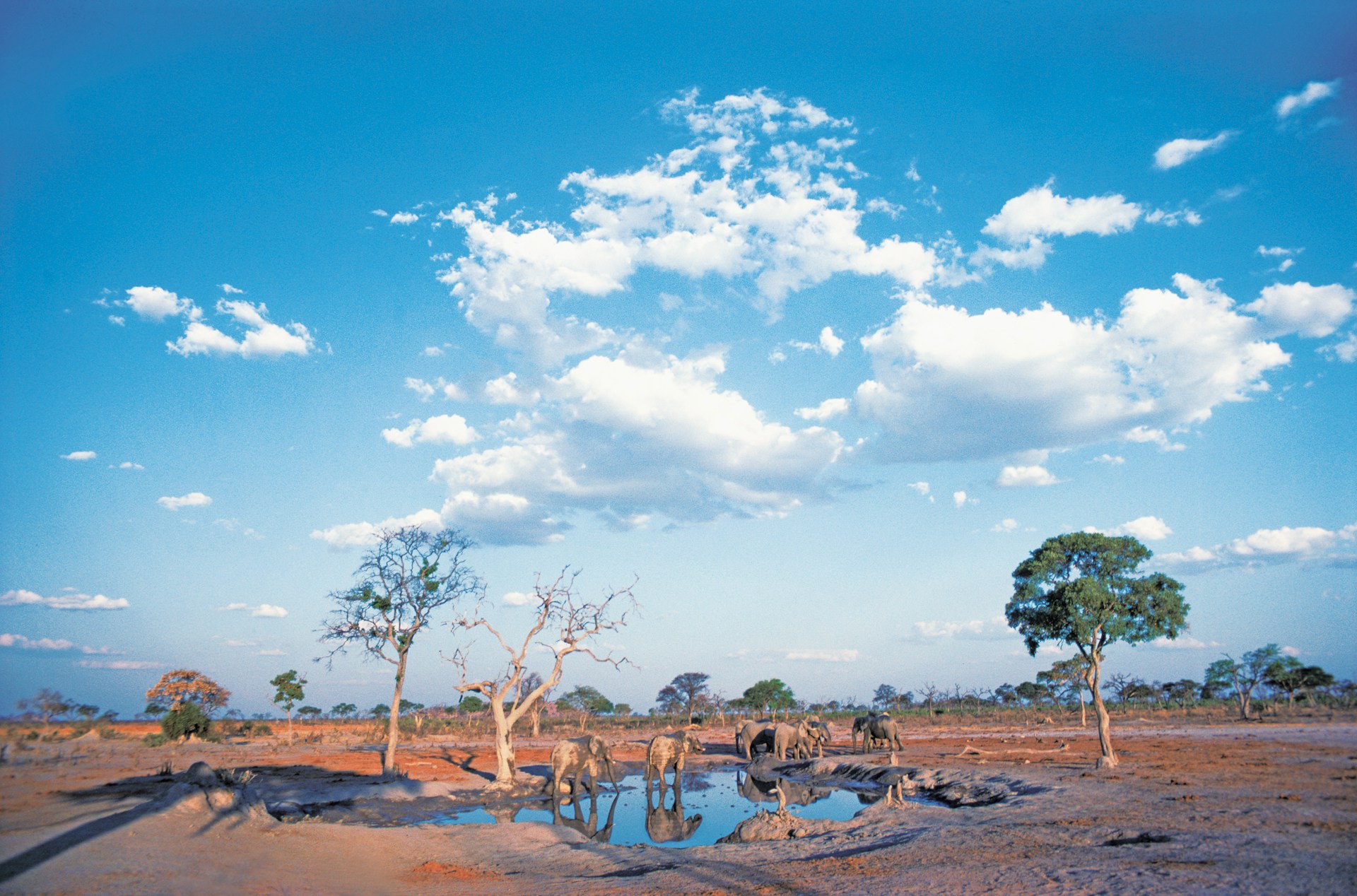
Botswana is home to approximately 131,909 elephants — roughly a third of Africa's entire savanna elephant population, and the largest single-country concentration on earth. That number is cited to justify a great deal: policy decisions, hunting quotas, diplomatic confrontations. What the data actually shows, according to Elephants Without Borders' 2024 aerial census, is a population that has been stable since 2010, growing at around 1% per year — not booming, as government rhetoric often implies. That distinction matters, because misrepresenting the data is increasingly being used to justify things that visitors should understand before they arrive.
The Okavango Delta — inscribed as UNESCO World Heritage Site number 1,000 in 2014 — is one of the world's most ecologically significant freshwater systems. It sustains 164 mammal species, 480 bird species, and approximately 30% of the world's remaining African wild dog population (fewer than 6,000 individuals survive globally). The delta provides drinking water for more than 250,000 people in an increasingly drought-prone region. It exists because the Okavango River, unlike almost every major African river, has no dam at its outlet — it terminates inland, flooding the Kalahari each year.
That system is under threat from upstream. ReconAfrica, a Canadian oil company, holds an exploration lease across the Okavango watershed in Namibia. Three test wells drilled within the watershed since 2021 found no commercially extractable oil, and ReconAfrica's stock has collapsed — but the company has not formally relinquished the concession. UNESCO's 2023 State of Conservation report flagged the ongoing exploration as a matter of "great concern." BirdLife International called for a moratorium. The governments of Botswana and Namibia have both supported the exploration — a position that puts them in direct conflict with their obligations to the World Heritage site.
Botswana's conservation areas — national parks, game reserves, and Wildlife Management Areas — cover 38% of the country's total land area. That is an extraordinary commitment. But conservation areas and people do not share space without conflict. In the eastern Okavango Panhandle, 16,000 people live alongside more than 11,000 elephants. Between 2018 and 2022, over 46,000 human-wildlife conflict incidents were reported nationally. The government has paid significant sums in compensation — but compensation only covers five specific crops, leaving many families bearing losses that go unrecognised.
A second ethical layer involves the San (Basarwa) people, specifically the G|ana and G|wi Bushmen of the Central Kalahari Game Reserve (CKGR) — the world's second-largest game reserve, and their ancestral homeland. Three staged government relocations from 1997 onwards moved three-quarters of the San population out of the reserve. A 2006 High Court ruling found the removals unlawful and unconstitutional — but implementation of that ruling has been persistently obstructed. The San's right to return is formally recognised; their ability to exercise it, in practice, remains heavily restricted. In 2014, a diamond mine opened in the southeast of the CKGR — the same reserve from which the San were evicted, ostensibly to protect wildlife.
Visitors who spend time in Botswana should understand these tensions. The country's extraordinary wildlife is real. The ethical complexity surrounding how it is governed is equally real.
What responsible tourism looks like here
Botswana's foundational tourism strategy is the high-value, low-volume (HVLV) model: fewer visitors, higher prices, lower environmental impact. This approach kept Botswana's wildlife areas significantly less crowded than comparable destinations in East Africa and generated premium revenue without proportionally increasing footprint. A 2021 revised Tourism Policy shifted toward a broader price range to expand economic participation — that policy tension is ongoing, and its long-term conservation implications are being watched by operators and conservationists.
The Botswana Tourism Organisation (BTO) runs the national Ecotourism Certification System, a three-tier framework of Green, Green+, and Ecotourism standards, covering 240+ criteria across environmental management, cultural heritage protection, community development, and socio-economic responsibilities. The system is integrated with the Global Sustainable Tourism Council (GSTC) criteria and Green Key. Certification is valid for two-year periods and now extends to mobile safari operators — Okavango Expeditions became the first mobile operator certified. When booking, ask operators for their certification tier — it is specific, verifiable, and not self-declared.
The most structurally significant community mechanism is Community-Based Natural Resource Management (CBNRM). Under the CBNRM framework, communities form registered trusts that hold legal rights over wildlife management on communal land and lease concessions to private operators or run their own tourism ventures. Active community trusts include the Khwai Development Trust (managing NG18, approximately 180,000 hectares of the eastern Okavango Delta), Sankuyo Tshwaragano Management Trust, and the Okavango Kopano Mokoro Community Trust. Wilderness Safaris, which has partnered with community trusts in Botswana since the 1980s, paid USD 17.1 million in community benefit payments across its African operations in FY2025.
The 2022 protected area fee overhaul is worth knowing about. Fees that had been unchanged for over 20 years were revised — and in the first year, revenue reached US$7.8 million, more than four times the projected US$1.8 million. That additional income funds anti-poaching operations, park management, and infrastructure. Reputable operators include these fees in their quoted prices; confirm that they do.
The Okavango Delta mokoro (traditional dugout canoe) experience is not just an activity — it is one of the most direct routes into the CBNRM economy at the community level. Asking which trust your poler is affiliated with is a reasonable and welcome question.
Do's and don'ts
Do:
- Ask operators for their BTO certification tier — Green, Green+, or Ecotourism — before booking; this is Botswana's national standard, aligned with GSTC and Green Key, and distinguishes it from self-declared eco-labelling
- Stay on designated roads in all national parks; off-road driving is strictly prohibited in Chobe, Moremi, and Makgadikgadi — community concessions like Khwai permit guided off-road driving, but clarify per concession
- Be back at camp before sunset in national parks; park rules require visitors to be at a designated camp or gate by dark — this is enforced, not advisory; community concessions typically allow night drives
- Choose the Southern African circuits (Okavango, Linyanti, Kwando) over generic "safari" packages — these areas operate on low-density models with real conservation links
- Ask which community trust your mokoro poler is affiliated with; it is a welcome question and connects your visit directly to CBNRM income streams
- Apply for drone permits from the Civil Aviation Authority of Botswana (CAAB) well in advance of travel — drone use in protected areas requires permits and separate fees; arriving without prior approval will not work
Don't:
- Book Kilimanjaro-style budget packages expecting standard safari outcomes — Botswana's pricing reflects genuine conservation costs; very cheap operators typically cut corners on community benefit payments and environmental standards
- Accept "elephant overpopulation" framing as settled science; Elephants Without Borders' data shows a stable population growing at 1% annually, not a crisis population — you will encounter this debate with guides and operators, and it is worth approaching with curiosity rather than assumption
- Book tours marketed as "authentic San/Bushmen cultural experiences" in the CKGR without researching the operator's relationship with the communities involved; Survival International has documented the use of Bushmen cultural imagery to market a reserve from which the San were forcibly removed
- Drive a standard 2WD vehicle into parks or concessions — most of Botswana's park roads require a 4x4; getting stuck in a reserve creates real problems for rangers and wildlife
- Photograph people, particularly in Khwai village and San communities, without explicit consent; this is a cultural norm with real local standing, not a formality
- Dismiss the trophy hunting debate as someone else's concern; Botswana's elephant hunting quota has increased 48% since the hunting ban was lifted in 2019, and a proposal to add lions to the quota for the first time is under active review — it is a legitimate topic to raise with operators
Local organisations to know
Botswana Tourism Organisation (BTO) is the national tourism authority and the body responsible for the Ecotourism Certification System. Their website lists certified operators by tier and covers the certification criteria in detail.
Ecoexist Trust works in the Okavango Panhandle on human-elephant coexistence through research, conflict monitoring, and support for the "Elephant Aware Economy" — practical tools and training that help communities find economic models compatible with living alongside one of the densest elephant populations on earth.
Elephants Without Borders conducts the aerial wildlife surveys that produce the most reliable population data for Botswana and the broader KAZA ecosystem. Their publicly available reports are the primary reference for understanding what is actually happening with elephant populations, free of political framing.
Conservation International — Botswana has worked in the Okavango Basin since 1993, focusing on protecting the headwaters in Angola and coordinating conservation across Botswana, Angola, and Namibia.
National Geographic Okavango Wilderness Project is working to secure formal legal protection for the entire Okavango Basin — from the headwaters in Angola to the delta in Botswana — through community co-management and transboundary policy frameworks.
Survival International monitors the rights situation of the G|ana and G|wi Bushmen in and around the Central Kalahari Game Reserve and provides detailed documentation of the displacement controversy for visitors who want to engage with this history seriously.
Government and policy context
Botswana's national parks are managed by the Department of Wildlife and National Parks (DWNP). Wildlife Management Areas fall under DWNP and the broader framework of the Wildlife Conservation and National Parks Act (1992). Penalties for poaching are significant: killing an elephant carries a fine of P50,000 and up to 10 years imprisonment; killing a rhino carries P100,000 and up to 15 years. The anti-poaching record has improved substantially — Botswana's rhino population dropped to approximately 265 animals by 2022 following a poaching surge, and intensive protection operations have stabilised numbers.
The KAZA Transfrontier Conservation Area is the world's largest land-based transboundary conservation area at 520,000 km² — approximately the size of France — spanning Botswana, Angola, Namibia, Zambia, and Zimbabwe. It encompasses 36 proclaimed protected areas. Botswana holds 30% of KAZA territory and includes the Okavango Delta, Chobe National Park, and Makgadikgadi Pans. The scale of KAZA means that conservation decisions in one country affect wildlife corridors and populations in all five.
Trophy hunting policy is a live controversy. President Khama banned hunting in 2014; President Masisi lifted the ban in 2019 with an initial elephant quota of 290. That quota has risen steadily — 290 in 2019, 400 in 2024, 410 in 2025, with a proposed 430 for 2026. Current proposals would also, for the first time, add lions and other big cats to the quota. Elephants Without Borders' modelling suggests that sustained targeting of mature bulls could reduce bulls over 50 years old by up to 50% over time — removing the genetic material most valuable to the population.
The ReconAfrica oil exploration situation remains unresolved. No commercially extractable oil has been found in three test wells, but the exploration licence has not been surrendered. UNESCO continues to monitor the situation as a formal threat to the World Heritage site.